
Factory Supply 80% Zein Protein Powder
What is Zein Protein?
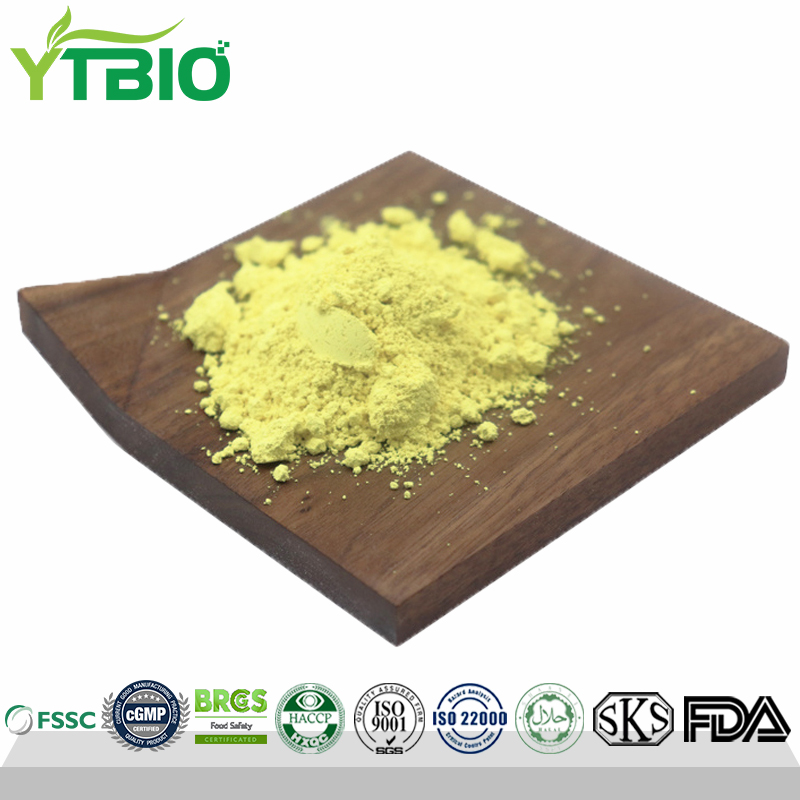
Zein protein, commonly known as "corn gluten""Zein", is a storage protein widely found in plants such as corn. It is a mixture of proteins with an average molecular weight of 25,000 to 45,000. Based on their molecular weight and solubility, it can be divided into four types: α-zein, β-zein, γ-zein, and δ-zein. α-zein is the primary component, accounting for 70% to 85% of the total zein protein. Its high content of non-polar amino acids such as glutamine, leucine, proline, and alanine, and its lack of alkaline and acidic amino acids, gives it unique solubility. It is insoluble in relatively low-concentration salt solutions but soluble in alcohol solutions, high-concentration urea solutions, high-concentration alkaline solutions (pH > 11), and anionic detergents. It maintains its molecular conformation in 60% to 95% ethanol solutions. Zein is typically a pale yellow powder, which becomes white after multiple decolorization treatments.
Zein protein possesses a high protein content—comprising Zein (68%), Glutelin (22%), Globulin (1.2%), and a small amount of Albumin—and is widely utilized in the feed industry to boost protein levels or to serve as a carrier for feed premixes.
Zein Protein Production Process
A method for extracting Zein protein is characterized by using corn protein powder as the raw material; subjecting it to destarching, degreasing, and decolorization treatments by adding α-amylase, glucoamylase, and ethanol; filtering the mixture; extracting the resulting filter residue with an aqueous ethanol solution; separating the liquid via centrifugation to obtain a Zein protein extract; and finally concentrating and drying the extract to yield the finished Zein protein product. Specifically, the method comprises the following steps:
(1) Pre-treatment: Using corn protein powder as the raw material, add water and adjust the pH to 5.0–6.5; add α-amylase and allow the reaction to proceed at 65–90°C for 1.5–6 hours; subsequently, raise the temperature to 120–140°C to deactivate the enzyme. Once the temperature has cooled to ambient temperature, adjust the pH to 3.0–5.0; add glucoamylase and allow the reaction to proceed at 45–60°C for 1–4 hours; then, raise the temperature again to 90–110°C to deactivate the enzyme. Filter the mixture and discard the filtrate. Add ethanol to perform degreasing and decolorization; filter the mixture again and discard the resulting filtrate.
(2) Extraction: Add an aqueous ethanol solution to the filter residue and heat the mixture to perform the extraction.
(3) Centrifugation: Perform centrifugation to separate the liquid phase; the resulting solution constitutes the Zein protein extract.
(4) Concentration: Concentrate the extract under reduced pressure to obtain a wet Zein protein product.
(5) Drying: Dry the product using vacuum drying or forced-air drying to obtain the finished Zein protein product.
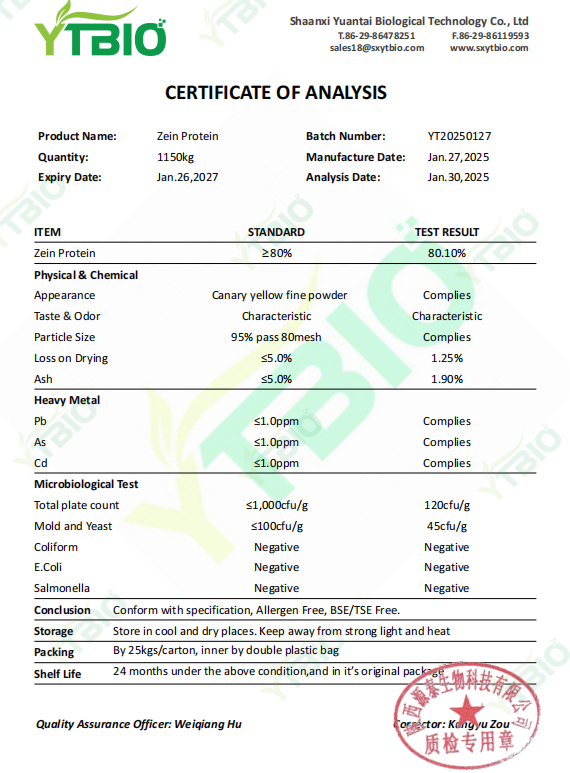
TEST REPORT
Main Functional Properties of Zein Protein
Zein protein is capable of interacting with both hydrophilic and hydrophobic substances, thereby playing a crucial role in stabilizing food components such as foams, emulsions, and dispersions.
Zein protein is rich in sulfur-containing amino acids; these amino acids can form strong intramolecular and intermolecular disulfide bonds, which—together with intermolecular hydrophobic interactions—constitute the molecular basis for Zein's film-forming properties. When a liquid Zein film-forming solution is cast into a mold, the concentration increases as the solvent evaporates, leading to the gradual formation of a Zein film. In addition to exhibiting excellent barrier properties against water vapor and oxygen, this protein film possesses superior water-retention and oil-retention capabilities; furthermore, it exerts a certain inhibitory effect on bacteria, thereby extending the shelf life of food products.
Application Prospects of Zein Protein
| Application Fields | Specific Application Scenarios | Core Functional Advantages |
| Food Industry | 1. Food coating/preservation layers: Surface coating/preservation layers for candies, nuts, fruits, and meat products2. Edible packaging materials: Biodegradable food packaging films and bags replacing traditional plastics3. Food additives: Added to various foods as emulsifiers, stabilizers, thickeners, and nutritional fortifiers4. Functional food development: Used as a protein raw material in protein powders, meal replacement foods, and special dietary foods5. Chewing gum base substitutes: Development of new edible, digestible, and biodegradable chewing gums | Excellent film-forming property, barrier properties (waterproof, oxygen barrier, UV resistance), antioxidant activity, biodegradability, and nutritional value |
| Pharmaceutical and Biomedical Fields | 1. Drug carriers: Used in microspheres, nanoparticles, hydrogels and other drug delivery systems to achieve controlled release, sustained release, and targeted delivery of drugs2. Biomedical materials: Used in absorbable sutures, tissue engineering scaffolds, wound dressings, and medical coatings | Excellent biocompatibility, biodegradability, low immunogenicity, and good processability |
| Cosmetics and Personal Care Fields | 1. Skincare ingredients: Used in moisturizing creams, lotions, serums, etc., to exert moisturizing, nourishing, antioxidant, and anti-aging effects2. Hair care products: Used in shampoos, conditioners, hair masks, etc., to improve hair quality, enhance hair toughness, and reduce frizz3. Color cosmetics: Used in foundations, lipsticks, eyeshadows, etc., as film-forming agents, adhesives, and skin feel regulators | Good biocompatibility, moisturizing property, film-forming property, antioxidant activity, and non-irritating property |

FAQ
Q: Are your raw materials food grade?
A: Yes, all are food grade and meet international food safety standards.
Q: What documents can you provide?
A: COA, MSDS, CAS, specification, certifications and customs files.
Q: What’s the shelf life?
A: 24 months in cool and dry storage.
Q: What’s your delivery time?
A: In-stock items: 1–3 days; bulk orders: 7–15 days.
Q: Do you support customization?
A: Yes, customized purity, particle size and blending are available.
