
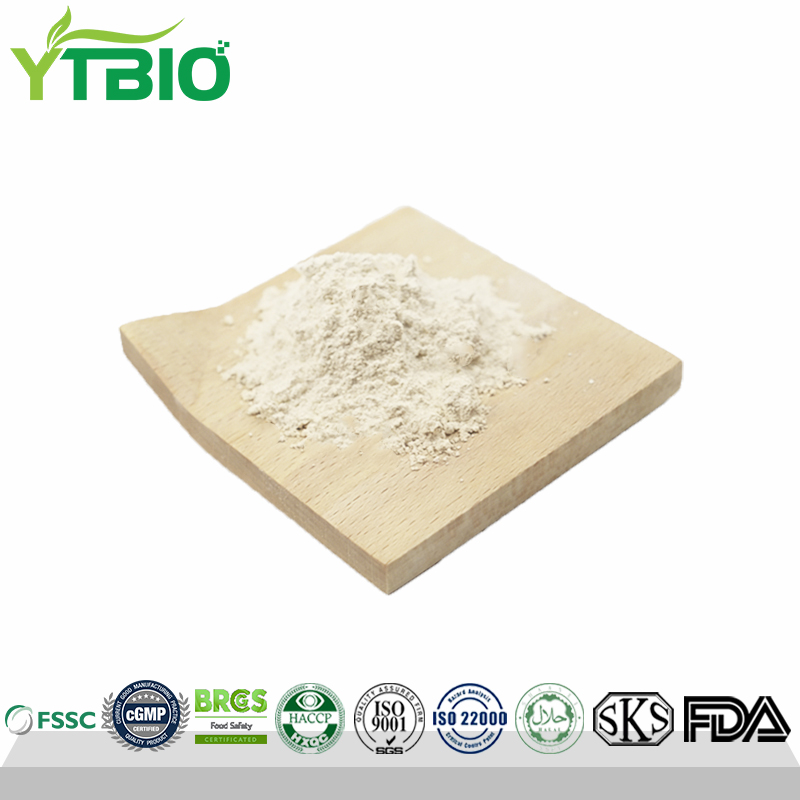
Manufacturer Supply 98% Tetrahydrocurcumin Powder
What is Tetrahydrocurcumin?
Tetrahydrocurcumin (THC) is the main hydrogenated metabolite of curcumin. It is both the highly active form of curcumin produced in the human body through metabolism and can be prepared from turmeric through chemical catalytic hydrogenation or enzymatic conversion. Compared to curcumin, the molecular structure changes of THC result in superior chemical stability and water solubility, significantly improving bioavailability. THC also inherits many of the activities of curcumin, showing particularly strong performance in anti-oxidation, whitening, and anti-inflammation. Currently, THC has become a popular ingredient in functional foods, high-end cosmetics, and pharmaceuticals. YTBIO provides you with synthetic THC of 98%+ purity, ensuring a purer, more stable, and more efficient product.
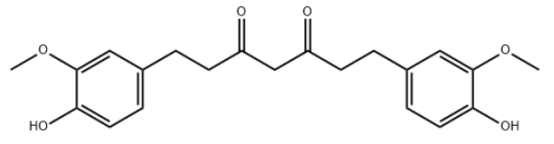
Product Features: Stable, skin-friendly, easily compatible, powerful antioxidant
|
ITEM |
STANDARD |
TEST RESULT |
|
|
Tetrahydrocurcuminoids |
≥98% |
99.23% |
|
|
Physical & Chemical |
|||
|
Appearance |
Off white or slight yellow powder |
Complies |
|
|
Identification |
NMR |
Complies |
|
|
Melting point |
91~97℃ |
94.5~96.7℃ |
|
|
Moisture Content (Karl Fiscoher titrimetric method) |
≤1% |
0.32% |
|
|
Conclusion |
Conform with specification, Allergen Free, BSE/TSE Free. |
||
|
Storage |
Store in cool and dry places. Keep away from strong light and heat |
||
|
Packing |
By 25kgs/Drum, inner by double plastic bag |
||
|
Shelf Life |
24 months under the above condition,and in it’s original package |
||
Mechanism of Action and Efficacy
1. Whitening Efficacy
Tetrahydrocurcumin is a highly effective tyrosinase inhibitor with significant whitening effects. It can:
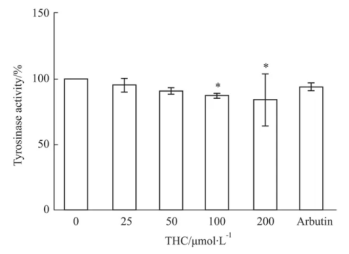
Inhibit tyrosinase activity: Experiments show that at doses of 100 μmol/L and 200 μmol/L, the tyrosinase activity in B16F10 cells decreased to 84.51% and 83.38%, respectively, significantly lower than the blank control group.
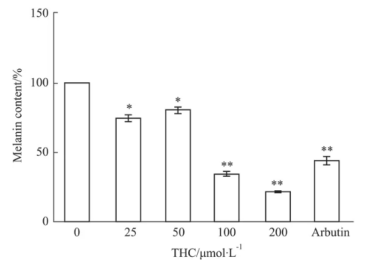
Inhibit melanin production: At concentration gradients of 25, 50, 100, and 200 μmol/L, the melanin content in B16F10 cells decreased to 74.34%, 80.14%, 34.37%, and 21.40%, respectively (P < 0.05 or P < 0.01), showing a clear dose-dependent effect.
Excellent half-maximal inhibitory concentration (IC50): Its ability to inhibit tyrosinase is superior to traditional whitening agents such as arbutin and kojic acid, making it suitable for the development of high-end whitening products.
2. Combating UV-Induced Photoaging
Animal experiments showed that tetrahydrocurcumin has a significant protective effect against UV-induced skin damage: After 10 weeks of continuous UVA+UVB irradiation, mice in the model group showed significant thickening, wrinkles, and crusting of the skin on their backs, indicating photoaging. Mice in the tetrahydrocurcumin intervention group (100 mg/kg) had smooth, delicate skin without redness or crusting, and their Bissett scores were significantly lower than those in the UV model group (P < 0.01). This indicates that tetrahydrocurcumin can effectively repair UV-induced photodamage and enhance skin elasticity.
3. Powerful Antioxidant
Free Radical Scavenging: Tetrahydrocurcumin exhibits dose-dependent scavenging of DPPH free radicals, demonstrating excellent antioxidant activity.
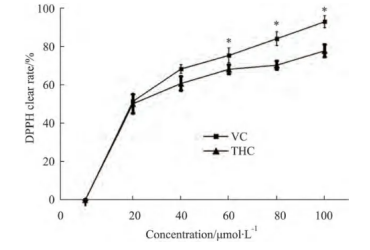
Reducing Capacity: At a concentration of 10 μmol/L, the reducing capacity of tetrahydrocurcumin for Fe³⁺ exceeded that of vitamin C at the same concentration (P < 0.05), showing potential superior to traditional antioxidants.
4. Inhibition of Inflammation and Promotion of Repair
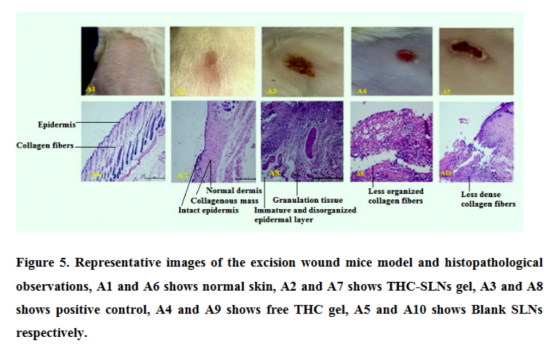
In a 14-day mouse wound healing model, the wound healing rate in the tetrahydrocurcumin-treated group was significantly faster than that in the positive control group and the blank control group. Observations showed that the skin tissue structure in the tetrahydrocurcumin group was more intact and the inflammatory response was milder, indicating that it has good anti-inflammatory and repair-promoting effects.
5. Other Health Benefits
Metabolic Regulation: Tetrahydrocurcumin helps lower blood sugar, improve insulin sensitivity, lower blood lipid levels, and improve non-alcoholic fatty liver disease.
Neuroprotection: Tetrahydrocurcumin helps reduce β-amyloid toxicity, improve cognitive function, and protect dopamine neurons.
Application Areas and Recommendations
1. Cosmetics
Tetrahydrocurcumin is an ideal additive ingredient in high-end skincare products.
Whitening Products: Such as serums, creams, and masks, used to brighten skin tone and lighten dark spots.
Anti-aging Products: Adding tetrahydrocurcumin helps combat photoaging, enhance skin elasticity, and reduce fine lines.
Sensitive Skin Repair Products: Adding tetrahydrocurcumin inhibits inflammatory responses and repairs the skin barrier. Sunscreen and Repair Products: Added tetrahydrocurcumin reduces UV damage and relieves post-sun redness and swelling.
Formulation Suggestions: Can be used synergistically with ingredients such as glycyrrhizin and VC ethyl ether; suitable for emulsion systems or liposome encapsulation systems.
Usage Limits: According to the "List of Used Cosmetic Ingredients (2021 Edition)," the maximum historical usage for leave-on products is 1%.
2. Health Foods
Tetrahydrocurcumin can be developed into health supplements to improve cognitive function and regulate blood lipids and blood sugar. Due to its high bioavailability and low toxicity, it is suitable for long-term use. Tetrahydrocurcumin can also be used as a functional food additive in the development of beverages, candies, etc., with health benefits.
If you are looking for high-quality tetrahydrocurcumin raw materials, YTBIO is your ideal choice. Welcome to contact us through online consultation or by email; we will provide you with professional services.
Email:sales@sxytbio.com
WhatsApp/phone:+86 17782577059
References:
- Liao Li, Hua Hua, Zhao Junning. Research progress of tetrahydrocurcumin [J]. World Science and Technology - Modernization of Traditional Chinese Medicine, 2014, 16(12):2708-2712.
- Du Shuxia, Shan Wang, Xu Li, Teng Xiaohuan, Tan Qikun. Structural characterization and in vitro antioxidant properties of synthetic tetrahydrocurcumin [J]. Food and Machinery, 2021, 37(09):168-172+210. DOI:10.13652/j.issn.1003-5788.2021.09.027.
- Liu Li, Zeng Anqi, Zhang Min, Zhao Junning, Hua Hua. Antioxidant, melanin inhibition and mechanism of action of tetrahydrocurcumin [J]. Chinese Journal of Pharmacology, 2022, 38(05):698-704.
- Kakkar, Vandita, Kaur, Indu Pal, Kaur, Amrit Pal, Saini, Komal and Singh, Kamalinder. Topical delivery of tetrahydrocurcumin lipid nanoparticles effectively inhibits skin inflammation: in vitro and in vivo study[J]Drug Development and Industrial Pharmacy Volume 44, 2018 - Issue 10
- Chuan Xu a,#, Qian-Wei Xiong d,#, Yue Li c , Jun-Ning Zhao b , Lu Zhang b , Xiao-Lu Li b,c,*. Explore the multitarget mechanism of tetrahydrocurcumin preventing on UV-induced photoaging mouse skin[J] Current issue Volume. 9 Issue. 5, May 2023
